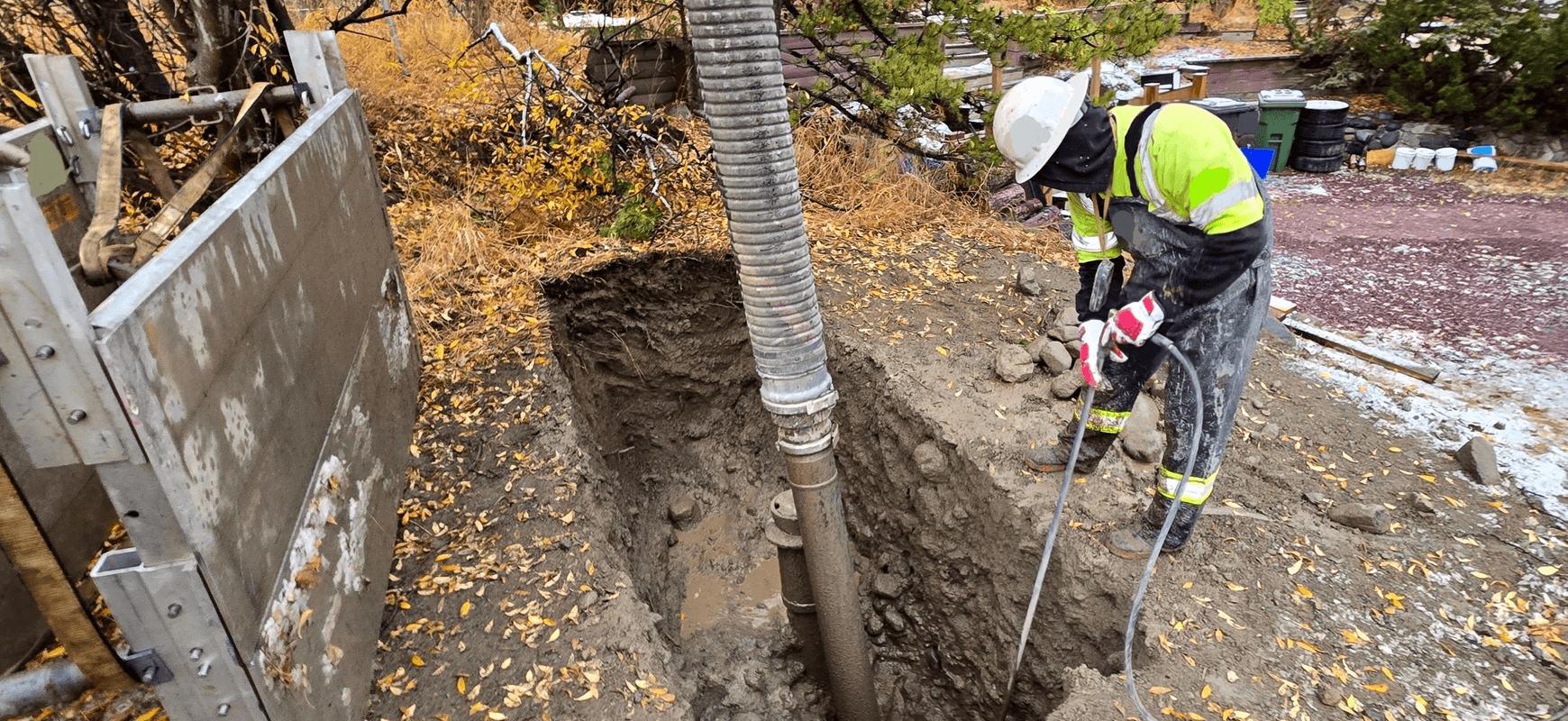
Utility marks show approximate underground locations, but many construction projects need field verification before excavation or boring can continue. Your Local Pro Hydrovac provides potholing and daylighting in Houston, TX to expose selected buried facilities so crews can confirm their actual position and depth.
A pothole is normally a focused test excavation rather than a large work pit. Hydrovac uses pressurized water to loosen soil while the vacuum system removes the material into the debris tank. The exposed facility can then be reviewed by the project team before the next phase begins.
Before the truck arrives, complete required utility-locate procedures and identify the exact pothole points. Provide expected depths when known, requested dimensions, truck access, hose distance, traffic-control needs, surface conditions, and the number of locations to be completed.
For projects with many verification points in Houston, TX, label each pothole on the plan or in the field before the truck arrives. A consistent naming system makes it easier to match the exposed utility to the correct bore crossing, station, drawing note, or inspection record after the work is complete.
Surface restoration in Houston, TX should also be planned in advance. Asphalt, concrete, landscaped areas, gravel, and unfinished soil may require different restoration steps after the utility has been documented and the test hole is ready to close.
Our Potholing & Daylighting Process
A typical visit in Houston, TX may include:
- Review the locate marks, drawings, pothole list, and project requirements.
- Confirm truck position, hose routing, traffic or pedestrian controls, and spoil handling.
- Set up the first approved test-hole location.
- Use controlled water and vacuum excavation to remove soil at the marked point.
- Expose enough of the facility for the project team to verify the needed information.
- Document or review the result, then move to the next approved pothole location.
The project contact should decide what information must be recorded at each location. That may include depth, horizontal position, pipe or conduit size, facility type, elevation, or clearance from a proposed bore or trench.
Need Potholing or Daylighting in Houston, TX? Call 800-865-3131
- Chris Wentworth
Glad i went with them. I was on the fence about trying a new company, but they made the whole process super simple. If you need service give them a try.
- Laura
They don’t make companies like this anymore. Honest, hard-working, and didn’t try to nickel and dime me. I’ll definitely be givin them a call again.
Where Utility Daylighting Is Used
- Directional Drilling: Verify crossings along a planned bore route before drilling proceeds through the utility corridor.
- Fiber & Communications: Expose utilities, conduit, and existing communications infrastructure during new installation or repair work.
- Civil & Site Construction: Confirm buried facilities before grading, foundations, trenching, drainage, or other excavation.
- Utility Maintenance: Create focused access where an owner or contractor needs to inspect or work around a buried facility.
Schedule Hydrovac Potholing in Houston, TX
Contact Your Local Pro Hydrovac of Houston, TX when your project needs selected underground utilities daylighted before construction. A clear pothole list and site plan help the local provider estimate travel, setup, excavation time, and debris capacity.